
The Lean Champion Black Belt Series are designed and developed specifically for Manager and above roles. These series are at the highest standard among the enterprise series. When a person completes all the 15 modules he / she can be awarded a "Lean Champion" certificate which is equivalent to a Black Belt and can lead groups of team in successfully developing strategies and implementation of various Lean principles.

The 15 modules are:
1. Intro 2 Lean Manufacturing – 108 slides
2. Map a Value Stream – 112 slides
3. Hoshin Kanri Policy Deployment – 50 slides
4. Develop a Lean Culture – 46 slides
5. Develop a Balanced Scorecard – 70 slides
6. Develop a Continuous Improvement System – 72
7. Optimize Product Cost – 67 slides
8. Manage 5S – 48 slides
9. Develop Quick Changeovers – 71 slides
10. Develop JIT – 47 slides
11. Implement a TPM – 58 slides
12. Determine & Establish Information Collection Requirements – 96 slides
13. Determine and Improve Process Capability – 60 slides
14. Apply Six Sigma to Process Control & Improvement – 79 slides
15. Process Optimization using Six Sigma – 94 slides
The 5th Module "Develop a Balanced Scorecard" covers the following topics:
1. Introduction to the Balanced Scorecard
—- What is it?
—- Why do it?
2. Balanced Scorecard Fundamentals
—- The Four Perspectives
—- Measures, Targets and Initiatives
—- Roles and Responsibilities
3. Using the Balanced Scorecard as a Management System
4. Issues and Challenges with the Balanced Scorecard
5. Implementing the Balanced Scorecard
You can also buy all the 15 modules at a 25% discounted as a bundled product.
Also add other presentations depending on your requirements, such as Kanban Implementation, Heijunka Implementation, Site Review Check List, Lean Assessment, Lean Leader and Lean Culture Surveys and BSC Assessment.
The module provides a comprehensive framework for linking strategic planning with performance measurement, ensuring alignment across all organizational levels. It also includes practical activities and real-world examples to facilitate the implementation of a balanced scorecard system.
Got a question about the product? Email us at support@flevy.com or ask the author directly by using the "Ask the Author a Question" form. If you cannot view the preview above this document description, go here to view the large preview instead.
Executive Summary
The "Lean Champion BB 5 - Develop a Balanced Scorecard" presentation is a comprehensive training module designed to equip corporate leaders and consultants with the tools necessary to implement a Balanced Scorecard (BSC) framework. Developed by a certified LSS Master Black Belt with extensive global training experience, this presentation outlines how to translate organizational strategy into actionable performance measures. Users will learn to create strategy maps, define key performance indicators (KPIs), and establish a management system that aligns with corporate objectives. Download this essential module to enhance your strategic execution and operational excellence.
Who This Is For and When to Use
• Corporate executives seeking to implement strategic management frameworks
• Lean Six Sigma practitioners focused on performance measurement
• Business consultants advising organizations on strategy execution
• Team leaders responsible for aligning departmental goals with corporate strategy
Best-fit moments to use this deck:
• During strategic planning sessions to align objectives with performance measures
• In workshops aimed at developing or refining a Balanced Scorecard
• When training teams on performance management and operational excellence
Learning Objectives
• Define the Balanced Scorecard and its significance in strategic management
• Build strategy maps that illustrate the cause-and-effect relationships among objectives
• Establish key performance indicators that align with strategic goals
• Identify roles and responsibilities for implementing the Balanced Scorecard
• Implement a management system that utilizes the Balanced Scorecard for continuous improvement
• Address challenges and issues that may arise during BSC implementation
Table of Contents
• Introduction to the Balanced Scorecard (page 3)
• Balanced Scorecard Fundamentals (page 5)
• Using the Balanced Scorecard as a Management System (page 10)
• Issues and Challenges with the Balanced Scorecard (page 15)
• Implementing the Balanced Scorecard (page 20)
Primary Topics Covered
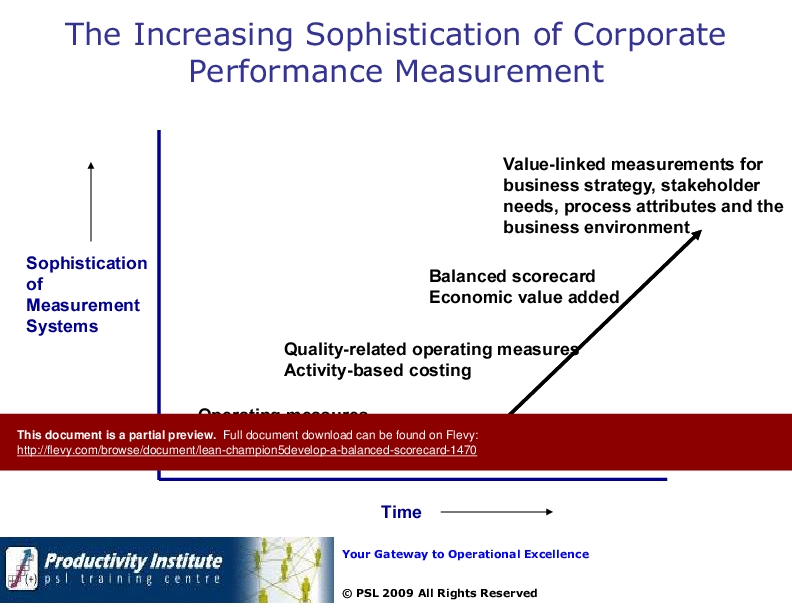
• Balanced Scorecard Definition - A framework that translates an organization's mission and strategy into performance measures, providing a comprehensive management system.
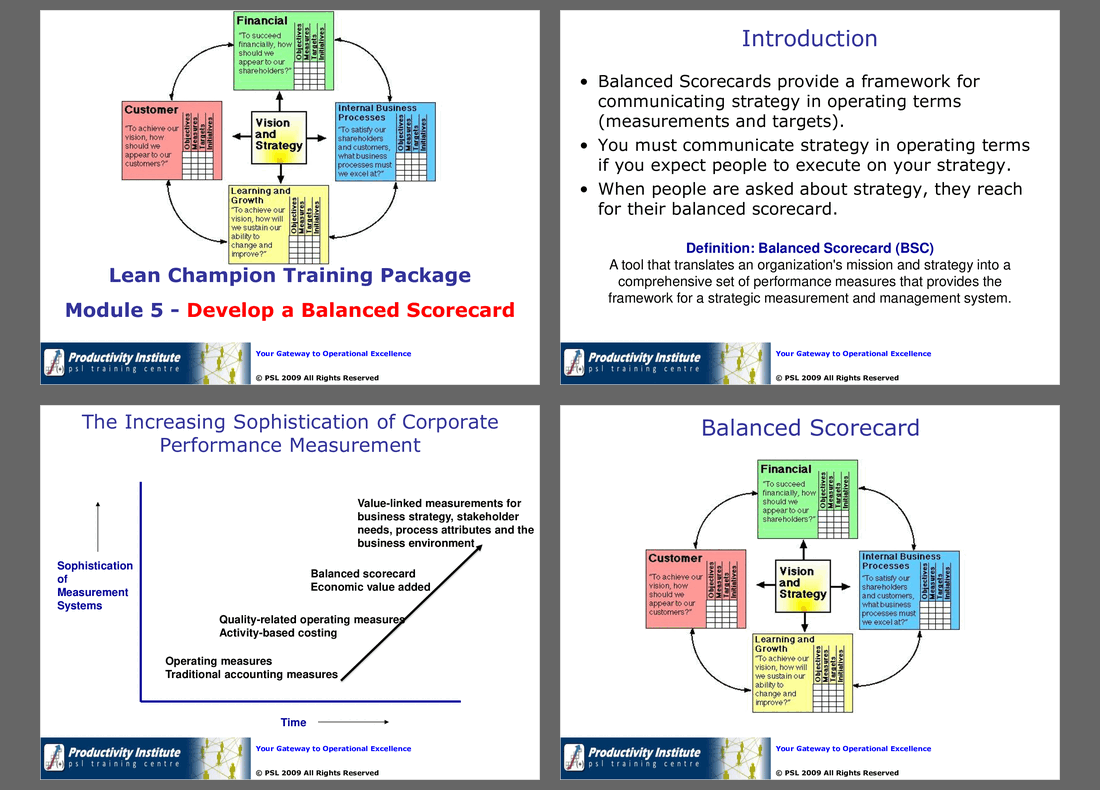
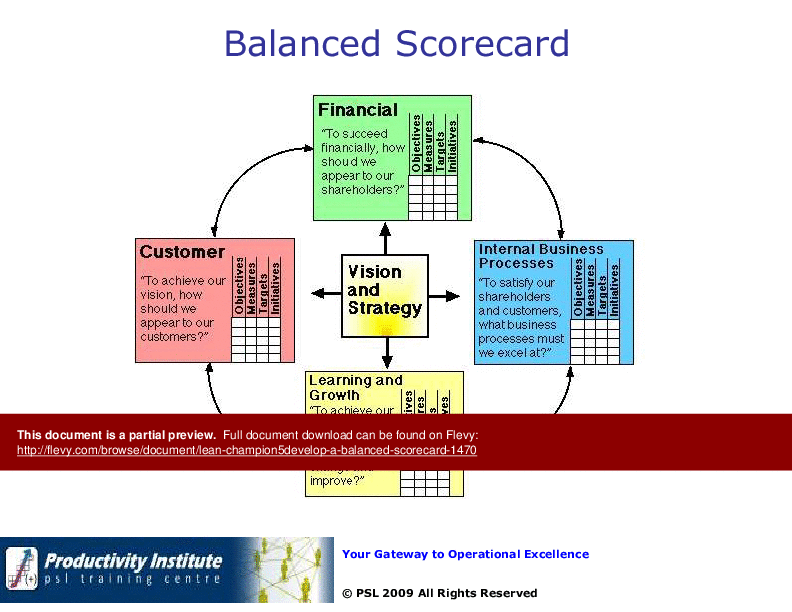
• Four Perspectives - Financial, Customer, Internal Processes, and Learning & Growth, which guide the development of strategic maps.
• Performance Measures - Metrics that provide feedback on achieving strategic objectives, including leading and lagging indicators.
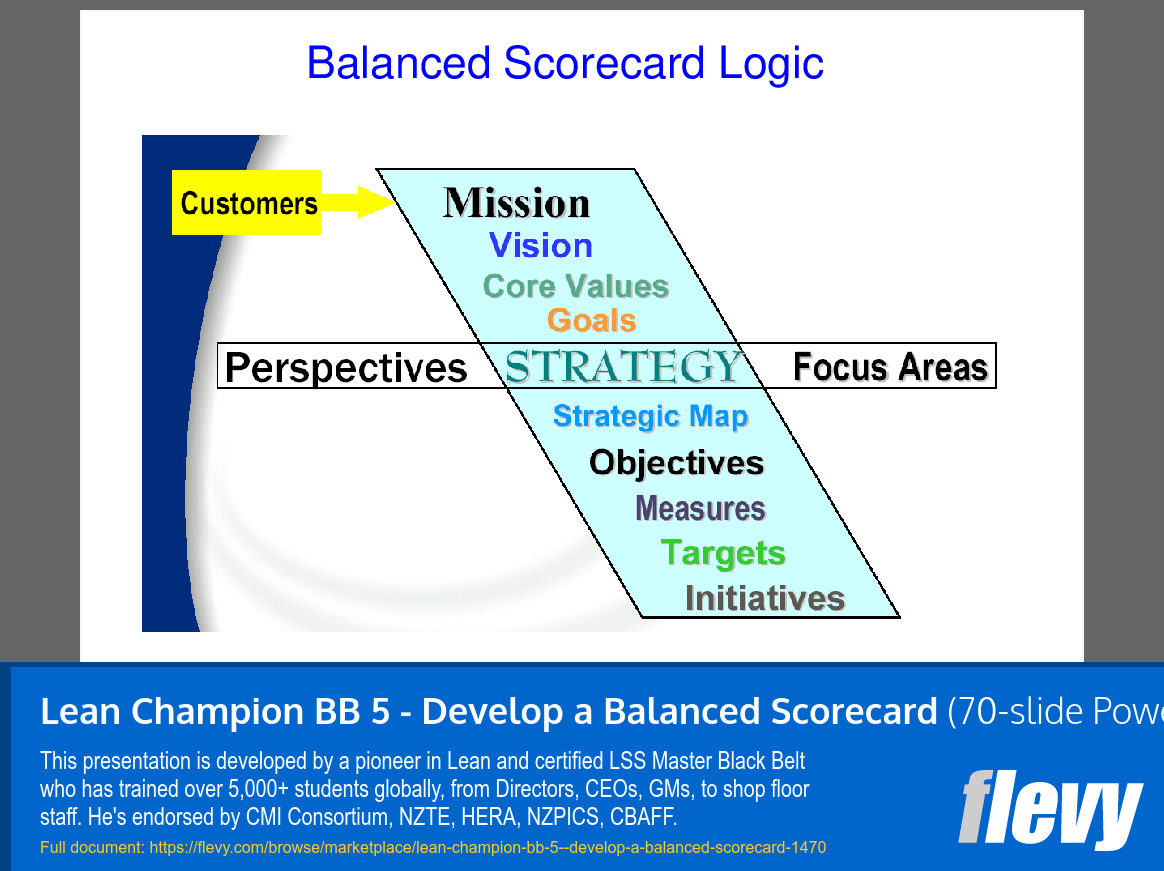
• Strategic Mapping - The process of visually representing an organization's strategy and linking objectives across the 4 perspectives.
• Initiatives - Major projects or programs necessary to achieve strategic objectives, complete with designated owners and timelines.
• Cascading Strategy - Communicating the Balanced Scorecard throughout the organization to ensure alignment at all levels.
Deliverables, Templates, and Tools
• Strategy map templates for visualizing organizational strategy
• Performance measure templates for defining KPIs
• Initiative planning templates to outline major projects and timelines
• Assessment tools for evaluating organizational performance across various metrics
• Communication plans for cascading the Balanced Scorecard throughout the organization
Slide Highlights
• Overview of the Balanced Scorecard framework and its purpose
• Visual representation of the 4 perspectives and their interconnections
• Step-by-step guide for developing a Balanced Scorecard
• Examples of effective performance measures and targets
• Best practices for implementing and sustaining the Balanced Scorecard
Potential Workshop Agenda
Introduction to Balanced Scorecard (60 minutes)
• Overview of the Balanced Scorecard framework
• Discussion on its importance in strategic management
• Group activity: Define your organization's mission and vision
Developing Strategy Maps (90 minutes)
• Workshop on creating strategy maps for each perspective
• Group presentations of strategy maps for feedback
• Discussion on linking objectives and measures
Performance Measures and KPIs (60 minutes)
• Introduction to key performance indicators
• Group activity: Identify and define KPIs for strategic objectives
• Discussion on leading vs. lagging indicators
Customization Guidance
• Tailor the strategy map to reflect your organization’s unique objectives and perspectives
• Adjust performance measures to align with specific departmental goals
• Incorporate organization-specific terminology and metrics into templates
• Modify initiatives to address unique challenges and opportunities within your organization
Secondary Topics Covered
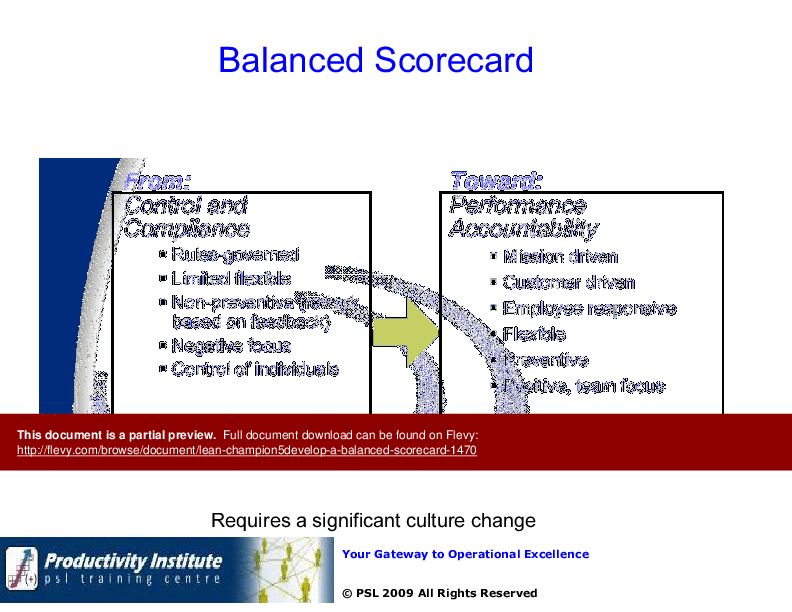
• Cultural changes required for successful Balanced Scorecard implementation
• Common pitfalls and challenges in adopting the Balanced Scorecard
• Best practices for sustaining the Balanced Scorecard over time
• The role of leadership in fostering a performance-driven culture
FAQ
What is a Balanced Scorecard?
A Balanced Scorecard is a strategic management tool that translates an organization's mission and strategy into a comprehensive set of performance measures.
Why should we implement a Balanced Scorecard?
Implementing a Balanced Scorecard improves communication of strategy, aligns departmental goals with corporate objectives, and enhances strategic feedback and learning.
How long does it take to implement a Balanced Scorecard?
The minimum time for developing a Balanced Scorecard is 3 months, while full deployment can take over a year depending on the organization's size.
What are the 4 perspectives of the Balanced Scorecard?
The 4 perspectives are Financial, Customer, Internal Processes, and Learning & Growth, each providing a different lens through which to view organizational performance.
What are key performance indicators (KPIs)?
KPIs are measurable values that demonstrate how effectively an organization is achieving key business objectives.
How do we develop effective performance measures?
Effective performance measures should be specific, measurable, achievable, realistic, and time-bound (SMART) to ensure they provide actionable insights.
What challenges might we face when implementing a Balanced Scorecard?
Common challenges include resistance to change, lack of understanding, and insufficient buy-in from leadership and staff.
How can we ensure that our Balanced Scorecard remains relevant?
Regularly review and update the Balanced Scorecard to reflect changes in strategy, market conditions, and organizational priorities.
Glossary
• Balanced Scorecard (BSC) - A strategic management tool that translates an organization's mission and strategy into performance measures.
• Key Performance Indicator (KPI) - A measurable value that indicates how effectively an organization is achieving its objectives.
• Strategy Map - A visual representation of an organization's strategy and the processes necessary to implement that strategy.
• Leading Indicator - A metric that predicts future performance and helps in proactive decision-making.
• Lagging Indicator - A metric that reflects past performance and outcomes.
• Cascading Strategy - The process of communicating and aligning the Balanced Scorecard across all levels of the organization.
• Initiative - A major project or program designed to achieve strategic objectives.
• Performance Measure - A metric used to assess the effectiveness of achieving strategic goals.
• Organizational Assessment - A process for evaluating the current performance and capabilities of an organization.
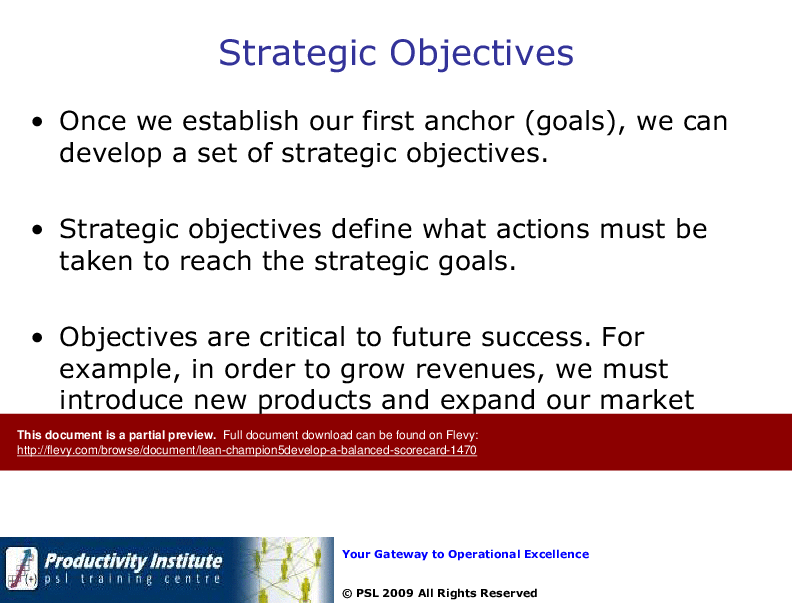
• Strategic Objective - A specific goal that an organization aims to achieve as part of its strategy.
• Financial Perspective - The viewpoint that focuses on financial outcomes and metrics.
• Customer Perspective - The viewpoint that emphasizes customer satisfaction and value.
• Internal Processes Perspective - The viewpoint that focuses on the efficiency and effectiveness of internal operations.
• Learning & Growth Perspective - The viewpoint that emphasizes the importance of organizational learning and development.
Source: Best Practices in Balanced Scorecard, Lean Six Sigma Black Belt PowerPoint Slides: Lean Champion BB 5 - Develop a Balanced Scorecard PowerPoint (PPTX) Presentation Slide Deck, OpEx Academy NZ
This document is available as part of the following discounted bundle(s):
Save %!
Lean Champion Black Belt Training Series - 15 Modules
This bundle contains 15 total documents. See all the documents to the right.
Save %!
PSL - Lean Execution Bundle
This bundle contains 11 total documents. See all the documents to the right.
|
Receive our FREE presentation on Operational Excellence
This 50-slide presentation provides a high-level introduction to the 4 Building Blocks of Operational Excellence. Achieving OpEx requires the implementation of a Business Execution System that integrates these 4 building blocks. |